
Agency Intelligence
Understand the agency's capabilities, team, experience, proof and gaps.
COR connects agency intelligence, client intelligence, qualification, strategy, proposals and presentations in one agency-controlled workflow.
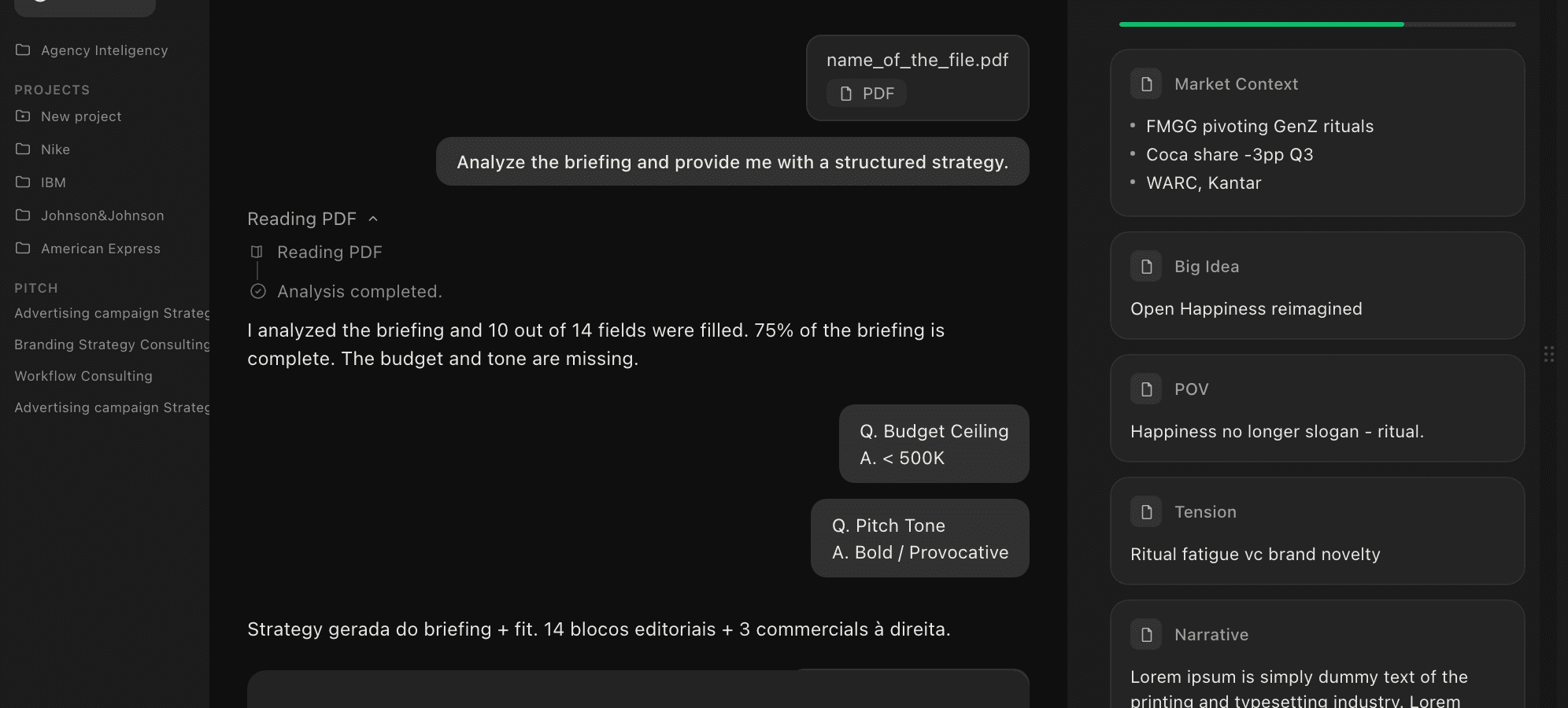
Your agency already has the knowledge. It is just scattered.
COR helps turn that scattered knowledge into a strategic starting point for every opportunity.
COR combines the brief with your agency's own context: services, capabilities, proof, case studies, team experience, past work, and positioning.
Then it helps identify:
The output is not just generated. It is grounded in the agency behind it.
Six stages from agency intelligence to presentation-ready materials.
Understand the agency's capabilities, team, experience, proof and gaps.
Understand the client, market, brief, requirements and context.
Evaluate fit, risk, effort, credibility and strategic value.
Develop defensible strategic routes based on what the agency can genuinely deliver.
Turn the selected strategy into a structured, tailored response.
Build editable, presentation-ready pitch materials.
Before COR builds the strategy, it helps the agency answer the first question:
Should we pursue this opportunity?
COR provides the assessment. The agency makes the final decision.
The agency stays in control at every stage.
COR helps structure the knowledge your team already uses but rarely has in one place.
Add your agency's:
COR uses this context to support proposal strategy, pitch direction, RFP analysis, credentials narratives, and client-facing recommendations.
COR is built to help agencies move from brief to strategic output faster.
An assessment of fit, risk, effort, credibility and strategic value — so the agency can decide whether to pursue.
Defensible strategic options based on what the agency can genuinely deliver.
A structured, tailored response built from the selected strategy.
Presentation-ready pitch materials the agency can edit and own.
Map brief and RFP requirements to your response so nothing critical is missed.
COR works across three layers:
Your work, proof, services, capabilities, case studies, people, and experience.
The brief, RFP, client need, requirements, risks, and decision criteria.
The recommended angle, proof, structure, tactics, risks, and proposal direction.
The more accurate the Agency Intelligence, the stronger the strategic output.
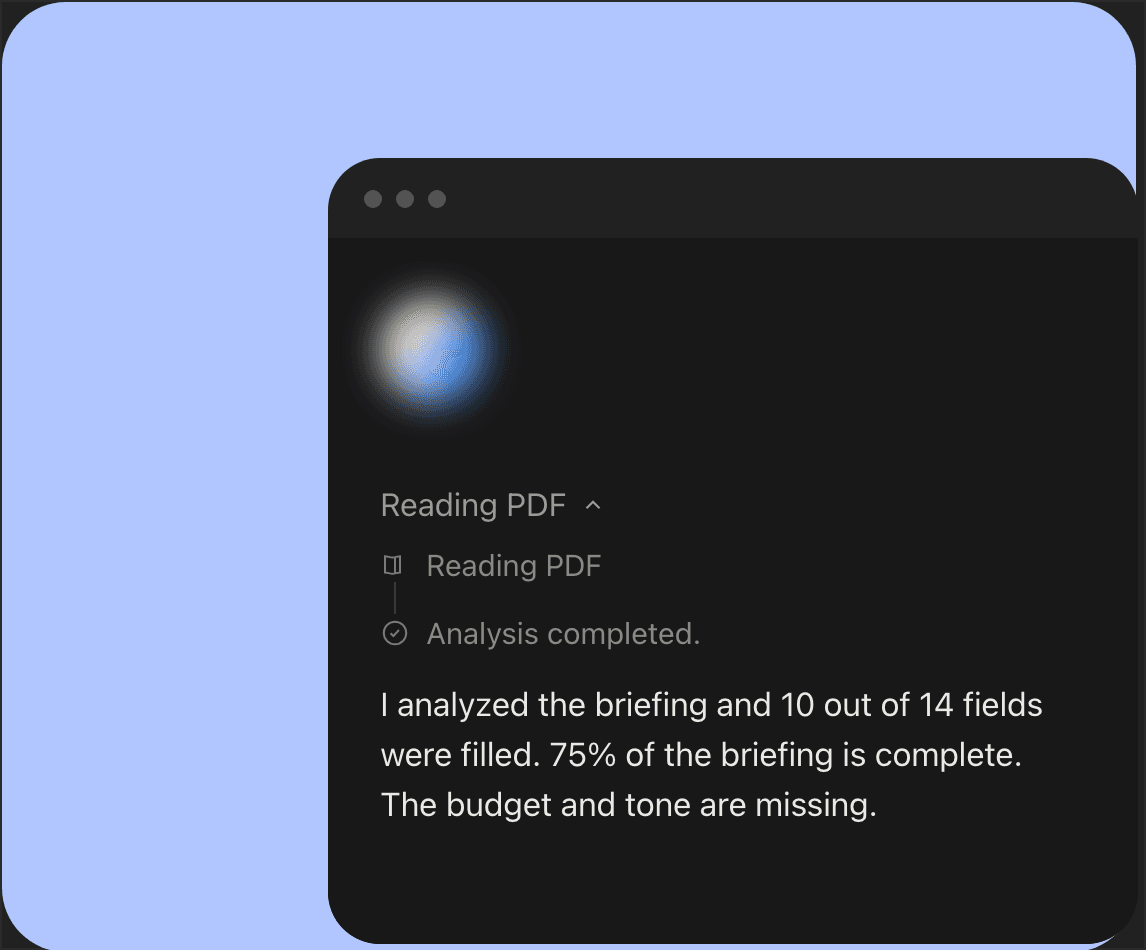
Upload an RFP or brief and COR analyzes it against your agency context.
COR helps show:
COR gives your team a stronger strategic starting point.
Give COR your agency context, then use it to analyze briefs, shape strategy, and build stronger proposal and pitch foundations.